

Somewhere in the constellation of Sagittarius, an object heavier than our entire Sun is spinning on its axis 716 times every single second.
Think about that number for a moment. In the time it takes you to blink your eyes once, this stellar corpse has completed more than two hundred full rotations. Its equator is whipping through the vacuum of space at nearly a quarter of the speed of light.
When graduate student Jocelyn Bell first detected this periodic cosmic ticking in 1967 at Cambridge, the pulses arrived with such unnatural, microscopic precision that she and her advisor Anthony Hewish humorously labeled the signal LGM-1 (short for Little Green Men). It seemed impossible that a natural astrophysical object could tick with the consistency of an atomic clock.
They hadn't discovered an alien civilization. They had discovered a Pulsar.
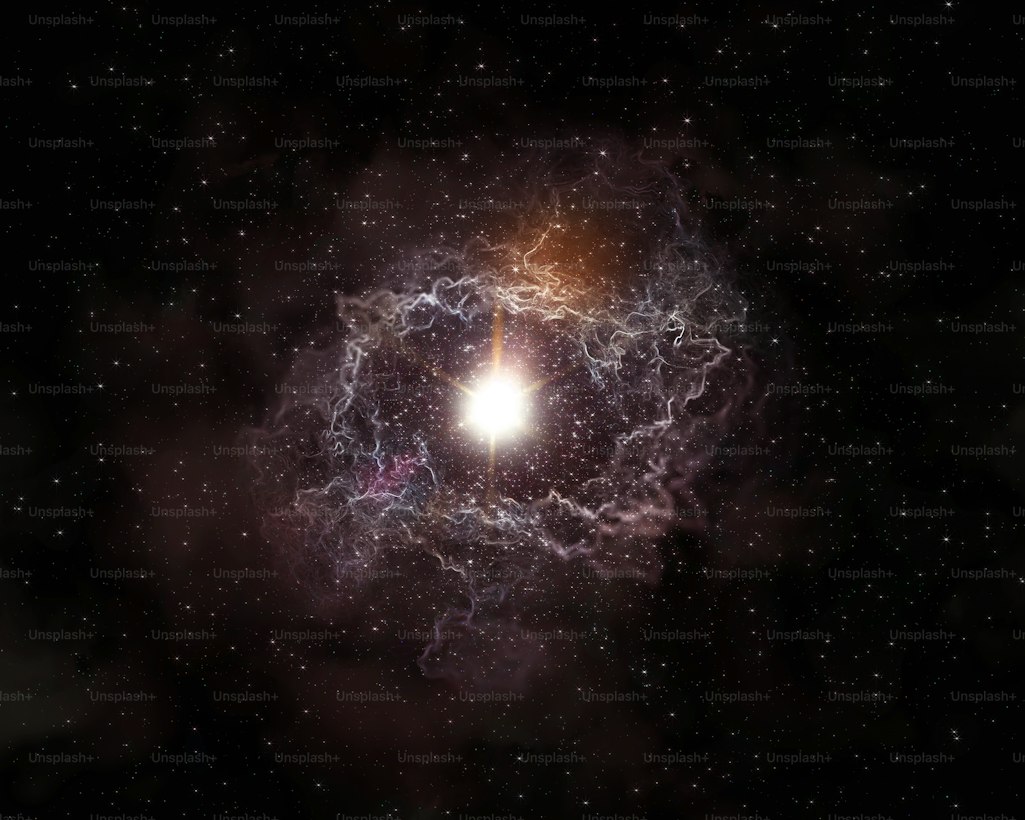
First: What Is a Neutron Star?
To understand a pulsar, you first have to understand where it comes from.
When a massive star (roughly 10 to 25 times the mass of our Sun) burns through the last of its nuclear fuel, its core collapses under runaway gravity in a fraction of a second. The gravitational pressure is so immense that it crushes protons and electrons together via reverse beta decay, forging a ball of pure, tightly packed neutrons:
The result is a Neutron Star: an object packing up to twice the mass of our Sun into a sphere barely 20 kilometers (12 miles) across. A single thimble of neutron star material would weigh over a billion tons on Earth.
The Ice Skater in Space: Why Do They Spin So Fast?
If you have ever watched a figure skater perform a spin on ice, you know that when they pull their outstretched arms inward toward their chest, they suddenly accelerate into a blur.
This is the Conservation of Angular Momentum:
Here, is the moment of inertia (how spread out the mass is), and is the rotational velocity.
An ancient giant star rotates slowly over weeks or months while spanning millions of kilometers across. When that gargantuan sphere is violently crushed down to the size of a city, its moment of inertia () plummets by a factor of trillions. To conserve angular momentum (), its spin rate () must skyrocket into overdrive.
The Lighthouse Mechanism
Why do pulsars pulse? They don't actually blink on and off.
During the core collapse, the star's original magnetic field is also squeezed into a tiny volume, amplifying its magnetic strength to trillions of Gauss. This hyper-intense magnetic field rips charged particles off the surface and accelerates them along the magnetic poles at relativistic speeds, firing out twin, narrow searchlights of high-energy radio waves, X-rays, and gamma rays.

Because the magnetic axis is tilted relative to the rotational axis (just like Earth's magnetic north is tilted from its rotational axis), these twin beams sweep across space in sweeping circles like a cosmic lighthouse.
Every time one of those beams sweeps across Earth's line of sight, our radio telescopes record a sharp, instantaneous pulse of radiation:
Because a pulsar has immense rotational inertia (weighing trillions of trillions of tons), nothing in space can easily slow it down or speed it up. Some millisecond pulsars lose only one second of time every few hundred million years, rivaling the stability of the best atomic clocks ever built by human engineers.
The Weird Science: Universe-Sized Gravitational Wave Detectors
Because millisecond pulsars tick with such unfailing regularity, astronomers realized they could use them as a galaxy-spanning scientific instrument: the Pulsar Timing Array (PTA).
Imagine dozens of millisecond pulsars scattered across the Milky Way, all sending radio pulses toward Earth. When a supermassive black hole binary merger ripples spacetime across the universe, the passing gravitational wave stretches and compresses the distance between Earth and those pulsars by fractions of a microsecond:
By tracking subtle correlations in the arrival times of pulses across dozens of stars over 15 years, consortia like NANOGrav and the European Pulsar Timing Array (EPTA) announced in 2023 the first detection of the cosmic background hum of gravitational waves.
We are literally using dead stars as antennas to listen to the vibrations of spacetime itself.
HK's Reflection: The Voice of Dead Stars
There is something profoundly poetic about pulsars.
When a star is alive, it is loud, chaotic, and messy: blowing solar flares, bubbling with convection cells, and losing mass into the void. A living star is hard to measure with extreme precision because it is constantly churning.
It is only in death, when all the nuclear fires have burned out and gravity has stripped away every excess layer of gas, that a star achieves absolute mathematical purity. A pulsar is a pristine gyroscope of pure nuclear matter.
It is a striking cosmic irony: a dead star tells us more about the fundamental fabric of spacetime, general relativity, and quantum matter than most living stars ever could.
Key Takeaways:
- Extreme Density: Pulsars are rapidly rotating neutron stars containing twice the Sun's mass crushed into a 20-kilometer city-sized sphere.
- Angular Momentum: Collapsing from millions of kilometers to a few kilometers forces the star to rotate up to hundreds of times per second, like a spinning figure skater pulling in their arms.
- The Lighthouse Effect: Pulsars emit continuous beams from their magnetic poles; we see them as rhythmic pulses whenever the beam sweeps across Earth.
- Cosmic Clocks: Their extreme rotational stability allows astrophysicists to use Pulsar Timing Arrays to detect gravitational waves rolling across the galaxy.
Sources and Further Reading
- Discovery & Foundations:
- Hewish, A., Bell, S. J., Pilkington, J. D. H., Scott, P. F., & Collins, R. A. (1968). Observation of a Rapidly Pulsating Radio Source. Nature, 217(5130), 709–713.
- Gold, T. (1968). Rotating Neutron Stars as the Origin of the Pulsating Radio Sources. Nature, 218(5143), 731–732.
- Astrophysical Mechanics:
- Lorimer, D. R., & Kramer, M. (2012). Handbook of Pulsar Astronomy. Cambridge University Press.
- Manchester, R. N., & Taylor, J. H. (1977). Pulsars. W. H. Freeman & Co.
- Pulsar Timing Arrays & Gravitational Waves:
- Agazie, G., et al. (NANOGrav Collaboration). (2023). The NANOGrav 15 yr Data Set: Evidence for a Gravitational-wave Background. The Astrophysical Journal Letters, 951(1), L8.
- Antoniadis, J., et al. (EPTA Collaboration). (2023). The second data release from the European Pulsar Timing Array. Astronomy & Astrophysics, 678, A50.